
Sandhyaa Manoj as a Dancer
The Foundation of a Dancer
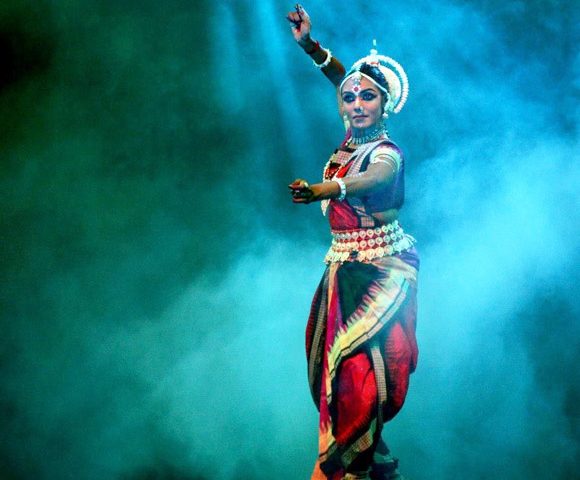
Sandhyaa Manoj’s journey into the world of classical dance began long before she could articulate the depth of her passion. Born into a Malayali family that valued art and culture, she was introduced to the rhythms and aesthetics of Indian classical traditions at a tender age. Her early fascination with the grace and discipline of temple dance forms led her to pursue formal training at Bharathanatyam and Mohiniyattam, the cradle of classical arts in South India.
Under the tutelage of Guru Parvathy Narayana Swamy, she trained rigorously in Bharatanatyam and Mohiniyattam, immersing herself in the precise geometry of Bharatanatyam and the fluid, lasya-oriented movements of Mohiniyattam. These early years shaped her understanding of rhythm (tala), expression (abhinaya), and grace (laya), the essential triad that would later define her signature style.
Through hours of daily practice, performances at temple festivals, and exposure to the spiritual symbolism of Indian classical arts, Sandhyaa developed a strong foundation not only as a dancer but as a seeker, one who viewed dance as a path toward self-realization.
The Evolution into Odissi
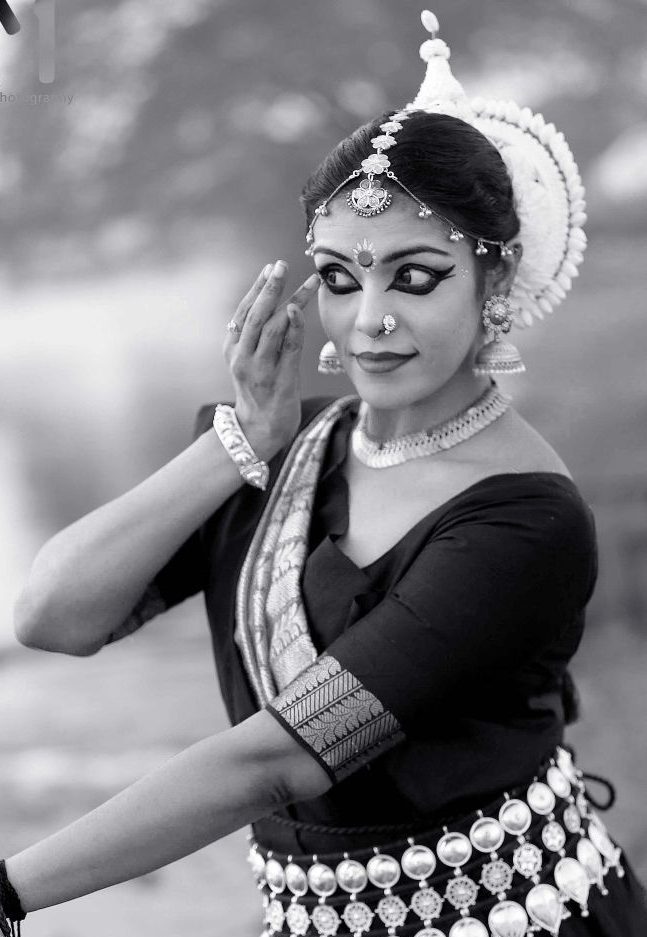
While Bharatanatyam and Mohiniyattam shaped her early artistic identity, Sandhyaa’s spiritual curiosity drew her toward Odissi, a dance form known for its lyrical grace and devotional depth.
She started her Odissi training under the tutelage of Srimati Geeta Shankaranilam at the Temple of Fine Arts in 1999. Then she sought advanced training and made several pilgrimages to Odisha, the birthplace of Odissi, where she trained under esteemed Guru Durga Charan Ranbir, one of the foremost torchbearers of Deba prasad Das. She later on also pursued in fine-tuning and honing her skills in Odissi with Guru Ratikant Mohapatra, who is the son of the legendary Odissi dancer Padmashree Kelucharan Mohapatra, who is widely regarded as the father of modern Odissi.
For years, Sandhyaa Manoj has learned, explored, performed, and even taught Bharatanatyam, has explored contemporary and ballet, has learned under Lucknowi Bhani and was blessed with the Kathak Gungurus by Pandit Birju Maharaj. But she truly believes that exploring different dance forms, exploring different dance forms is also finally to anchor in the exact dance form that your heart resonates with. Sandhya Manoj’s heart resonates absolutely with Odissi.
Major Performances and Contributions
Over the years, Sandhyaa has performed in numerous national and international festivals, cultural events, and artistic collaborations. Some of her notable performances include:
Her choreographies often merge traditional Odissi vocabulary with contemporary spiritual narratives, exploring inner stillness through movement.
Teaching and Mentorship
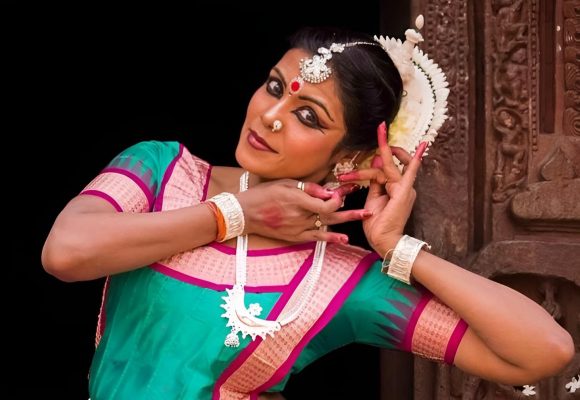
Sandhyaa is deeply committed to preserving and propagating Indian classical dance. She mentors young dancers through workshops, lecture demonstrations, and masterclasses, both independently and in collaboration with cultural organizations.
Her approach emphasizes connection over perfection — encouraging dancers to move from authenticity, awareness, and emotional truth rather than mechanical precision.
She believes that “Dance is yoga in motion, it unites the body, breath, and spirit into one harmonious flow.”